Seven years ago I wrote a post on this blog called How To Create a Bedtime Routine With Your Newborn Baby So They Will Sleep Through The Night.
I had one baby. He happened to be an easy sleeper. And I concluded, with the total confidence of a first-time mom, that this was because of something I was doing.
I have a newborn again now. Same routine, run by a considerably more tired woman. He gets up every two and a half hours like he is being paid hourly.
So this is me fixing my own post.
newborns are not built to sleep through the night
This is the part nobody selling a sleep course leads with.
A newborn’s stomach holds a couple of ounces. Breast milk clears it in about two hours, formula in three or four. They wake up because they are genuinely hungry. Not because they are manipulating you, and not because they haven’t learned yet.
And it isn’t only hunger. Waking easily is thought to be protective at this age — a newborn who sleeps like a rock and doesn’t rouse is not actually the thing you want, whatever the internet has been telling you. The waking is a feature.
Most babies don’t put together a genuinely long stretch until somewhere in the four-to-six month range. Plenty take longer. Then a tooth comes in and undoes all of it, and you start over.
That is not a routine failure. That is a baby.
so what is a bedtime routine actually for
It is not a vending machine where you put four steps in and sleep comes out.
What a routine actually buys you is predictability. Same order, same time, every night, until the sequence starts meaning something to the baby. Eventually going down gets easier. Not longer. Easier. Those are two different things, and the difference between them is basically this entire post.
It also gives you something to hold onto at eight at night when you have nothing left. There is a version of the evening that is a plan, and a version that is you and a screaming infant improvising. The plan is better even when the result is identical.
That is worth doing. It is just not what I sold it as in 2019.
the routine, honestly this time
1. feed before you start
Obvious, but it sets up everything after it. A baby who was last fed two hours ago is not going down for anything. Feed as much as he’ll take, then start.
2. bath — and not every night
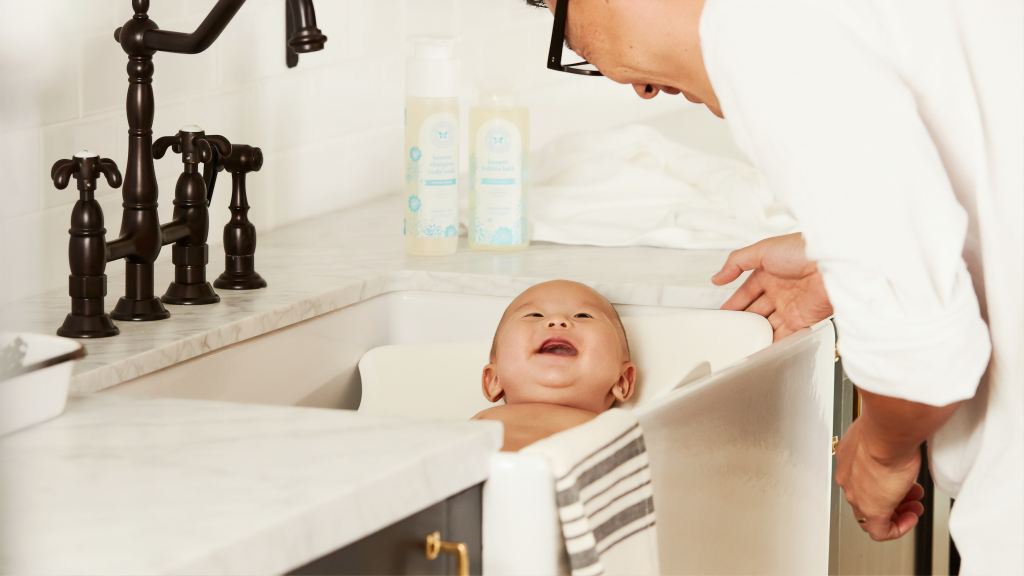
Newborns do not need a daily bath. Two or three times a week is plenty and their skin will thank you for it. On the nights you do it, it works as a strong signal that the evening has changed gears.
The reason a bath helps isn’t that it warms them up — it’s the drop in body temperature afterward, as they cool back down, that makes them drowsy. Which means the bath has to come before the last feed, not after it, or you’ve wasted the effect.
I used to tell people to use a lavender baby wash. I’d skip the fragrance now — a plain fragrance-free baby wash, and as little of it as you can get away with. Newborn skin does not need to smell like anything.
3. feed again, in the dark
Full belly, low light, no talking. This is the one step from the original post I’d keep exactly as written.
Low light means low. Overhead lights tell a baby it’s morning. A dim nightlight is enough to see a latch or a diaper by, and it’s the difference between a feed you both go back to sleep after and a feed that wakes the whole house up.
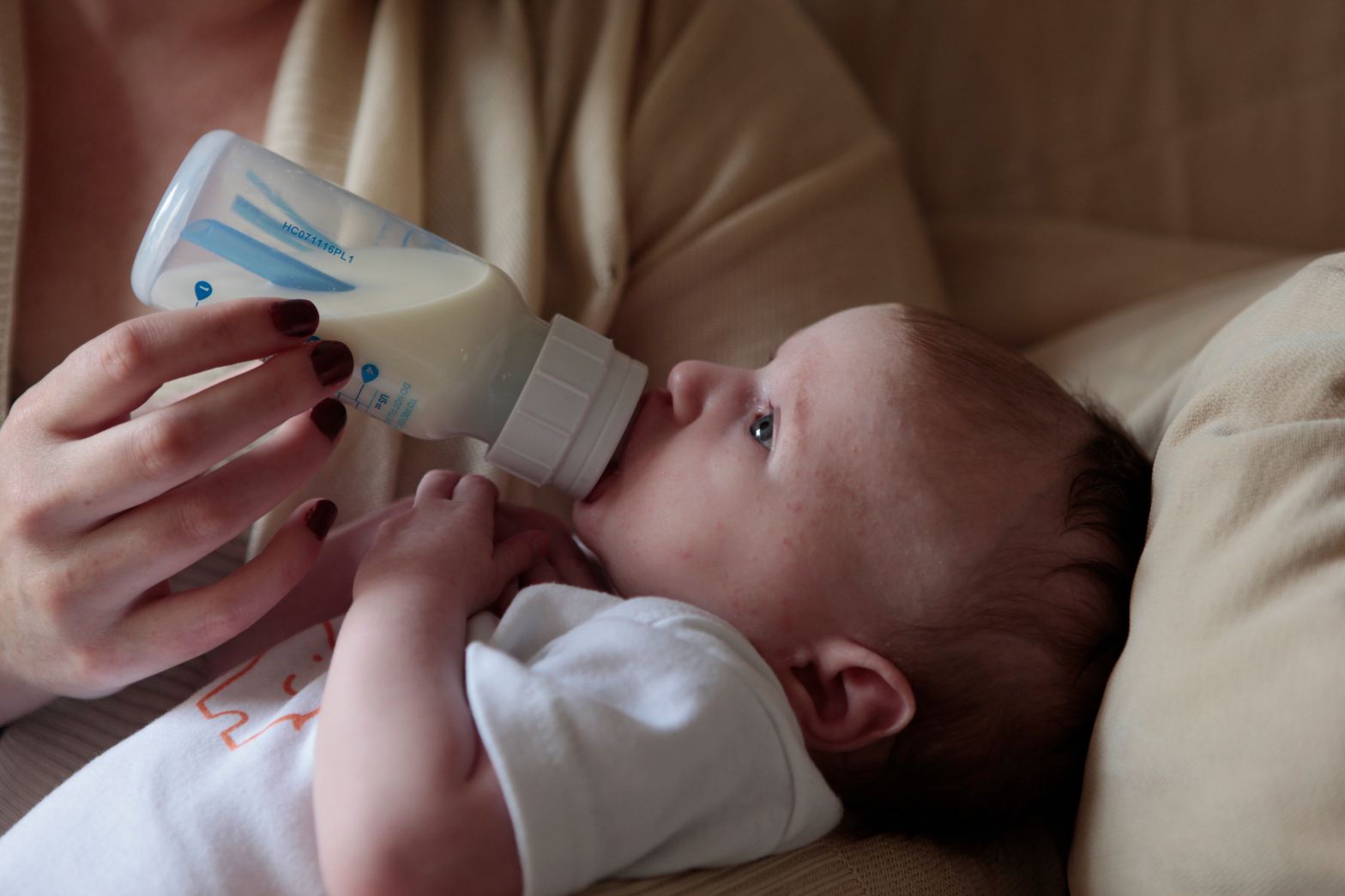
If you’re warming a bottle: never in the microwave. It heats unevenly and leaves scalding pockets in milk that feels fine on your wrist. A bowl of warm water works, or a bottle warmer if you’d rather not stand at the counter at 3am. Test it on your wrist every single time either way.
4. down drowsy, same time, same everything
Same order, same room, same time, boring on purpose. If you start at nine, start at nine — don’t drift to seven one night and back to nine the next.
And to be clear, since this is where the internet will try to sell you something: you do not sleep train a newborn. Cry-it-out methods aren’t meant for babies this young, and most people who work on infant sleep won’t touch it before four to six months. Before that you’re just responding to a baby, which is the job.
the safe sleep part, which is not optional
The original version of this post told you to warm the crib with a heating pad before you laid the baby down. I have taken that out, and I want to say plainly that it was bad advice and I’m sorry it sat here as long as it did.
Here is what the sleep space should be:
- Empty. A firm crib mattress and a fitted crib sheet, and nothing else. No blankets, pillows, bumpers, positioners, stuffed animals, or heating pads — not even to warm it beforehand, not even if you take it out again. Buy more fitted sheets than you think you need. You will be changing one at 3am and you are not doing laundry first.
- Baby on their back. Every sleep, naps included, until they’re rolling both directions on their own.
- Cool, not cozy. Overheating is a risk factor. Dress them in one more layer than you’d want, and that’s it. A wearable sleep sack instead of a blanket.
- In your room, not your bed. Room-sharing without bed-sharing is recommended for at least the first six months, which in practice means a bassinet next to you rather than the crib down the hall. It also saves you a walk every two hours, which at week three matters more than you’d think.
- Swaddled only until they try to roll. Not until you catch them rolling — the moment they start trying. A swaddled baby who gets onto their stomach can’t push back up.
- A pacifier at sleep time, if he’ll take one. This one surprises people: offering a pacifier for naps and bedtime is associated with a lower SIDS risk. If you’re breastfeeding, wait until feeding is well established. Don’t force it, don’t put it back in once he’s asleep, and never clip it to anything — nothing with a cord or a strap goes in the crib.
None of that is my opinion. That’s the standard guidance, and your pediatrician is the person to run anything specific past.
where the money actually goes
Baby sleep is an enormous industry built on desperate people at two in the morning, and most of it is junk. There is no gadget that fixes this. There are a few things that make the nights marginally less brutal:
- A sound machine. Covers the toilet flushing, the dog, the older kid. Keep it across the room and not loud — about as loud as a shower running, not a jet engine.
- Blackout curtains. More useful for naps and for summer bedtimes than for the middle of the night, but cheap and permanent.
- Sleep sacks, several. Same reason as the sheets. One is always in the wash or covered in something.
- Swaddles that close with velcro or a zipper. The blanket-origami they teach you in the hospital does not survive contact with an actual angry newborn at 2am.
- Overnight diapers. Not a sleep product, technically. But a leak at 4am costs you a diaper change, a full outfit change, a sheet change, and a baby who is now extremely awake. The heavier overnight ones are worth the extra couple of cents.
- A thick changing pad cover, or two. Same logic. Everything in this house is about not having to do a task at 4am that you could have prevented at 8pm.
Things I would not spend money on: anything that promises to make a baby sleep, anything that props or positions them, and any device that goes in the crib.
the one I actually love: the Owlet
I said there’s no gadget that fixes this and I stand by it. But I’m not going to pretend I didn’t buy one anyway, because I did, and I’d buy it again: the Owlet Dream Sock.
It goes on his foot and reads his pulse and his oxygen. What I actually use it for is the sleep tracking. Being able to glance at my phone and see whether he’s in light sleep or deep sleep has changed how I run the whole evening — I stopped going in to check on a baby who was fine, and I stopped bracing for a wake-up that wasn’t coming for another hour. After a couple of weeks you can see his real pattern instead of guessing at it, and that is what I built the routine around. It’s the closest thing to actual data I’ve had in seven years of doing this.
The rest of it is peace of mind, and I’m not going to be coy about that being most of the value. It let me sleep. Worth every dollar.
Two things I’d want you to know before you buy one, because I’d rather tell you than have you find out on your own:
- It is not a SIDS device, and nothing is. The FDA cleared the Dream Sock in 2023 as an over-the-counter pulse oximeter for healthy babies — it reports numbers, it doesn’t prevent anything, and Owlet doesn’t claim it does. The AAP is clear that home monitors shouldn’t be used as a way to reduce SIDS risk. Everything in the safe sleep section above applies exactly the same with a sock on. The empty crib is what’s doing the work. The sock is for you.
- It starts at one month. It’s cleared for healthy infants one to eighteen months, six to thirty pounds. So it is not a bring-them-home-from-the-hospital purchase, which is exactly when you’ll want it most. Sorry.
Also, expect it to false-alarm on you at some point, usually because the sock has worked its way loose. The first time it goes off at 2am you will lose about ten years. That’s part of the deal.
the part I actually wish someone had told me
When my first slept well, I thought I’d earned it. When this one doesn’t, by the same logic, I’d have to conclude I’ve gotten worse at being a mother in seven years.
Obviously that’s not what happened. I got a different baby.
That’s the thing the sleep content industry is quietly built on — letting you believe the outcome is a scorecard for your effort. It isn’t. Some babies sleep. Some don’t. The routine helps at the margins and the margins are worth having, but you did not cause this and you cannot fix it by trying harder.
Do the routine because a predictable evening is easier than an unpredictable one. Sleep when you can. Let people help you. And if someone hands you a post promising a newborn who sleeps through the night — including the one I wrote — be suspicious of it.
XOXO,
Lia
Some of the product links in this post are affiliate links, which means I get a small commission if you buy through them, at no extra cost to you. I only link things I actually use — this is what’s in my house right now, with an actual infant in it.
want the cleaning version of this?
Babies aren’t the only thing I do — I also own a cleaning company. I made a no-nonsense list for your house: what to actually buy, the order to clean a room in, and the two products that will hurt you. Two printable pages, free.
 Boss Mom Blog